Strengthening Digital Safety and Wellbeing in Education: Insights for a Resilient Digital Future
As digital technologies continue to shape the educational landscape, ensuring that young learners can safely and effectively navigate online environments has become more important than ever. Across Europe and beyond, initiatives like Perma-Digital are contributing to a broader conversation about digital resilience, inclusion, and wellbeing—particularly for younger students who are increasingly immersed in digital learning environments.
Understanding the evolving digital learning ecosystem
The transition to digitally mediated education—accelerated during and after the COVID-19 pandemic—has transformed how students engage with knowledge, peers, and teachers. For students aged 10 to 13, digital environments are no longer supplementary; they are integral to everyday learning experiences [1]. Recent research highlights that this shift brings both opportunities and challenges. Digital technologies can enhance access to information, foster collaboration, and support independent learning. However, they also introduce risks related to online safety, wellbeing, and digital inequalities [2]. This evolving context calls for a more comprehensive understanding of how digital safety, literacy, and wellbeing intersect in shaping students’ educational outcomes.
Key dimensions shaping students’ digital experiences
Emerging evidence points to four interconnected dimensions that significantly influence students’ engagement in digital learning:
1. Digital literacy: Digital literacy is a cornerstone of successful online learning. It enables students to critically evaluate information, use digital tools effectively, and adapt to new learning environments. Strong digital literacy skills empower students to become independent learners and navigate complex online ecosystems confidently [1].
2. Digital communication and relationships: Online platforms provide new spaces for interaction, collaboration, and community-building. Positive digital relationships can enhance students’ sense of belonging and engagement. At the same time, these environments must be carefully managed to prevent harmful interactions such as cyberbullying [1].
3. Digital wellbeing: Digital wellbeing encompasses the emotional and psychological aspects of online engagement. Balancing screen time, managing online stress, and fostering healthy digital habits are essential for maintaining students’ mental health and academic performance [1].
4. Digital habits: Students’ routines and behaviours—such as time management and responsible technology use—play a crucial role in shaping their learning outcomes. Well-structured digital habits support sustained engagement and more meaningful learning experiences [1].
The role of digital safety in shaping education
Digital safety is not just about protecting students from risks—it is fundamental to enabling positive and productive learning environments. Research shows that unsafe digital spaces can negatively impact mental wellbeing, academic performance, and social interactions. Conversely, safe and supportive environments foster confidence, participation, and resilience [1].
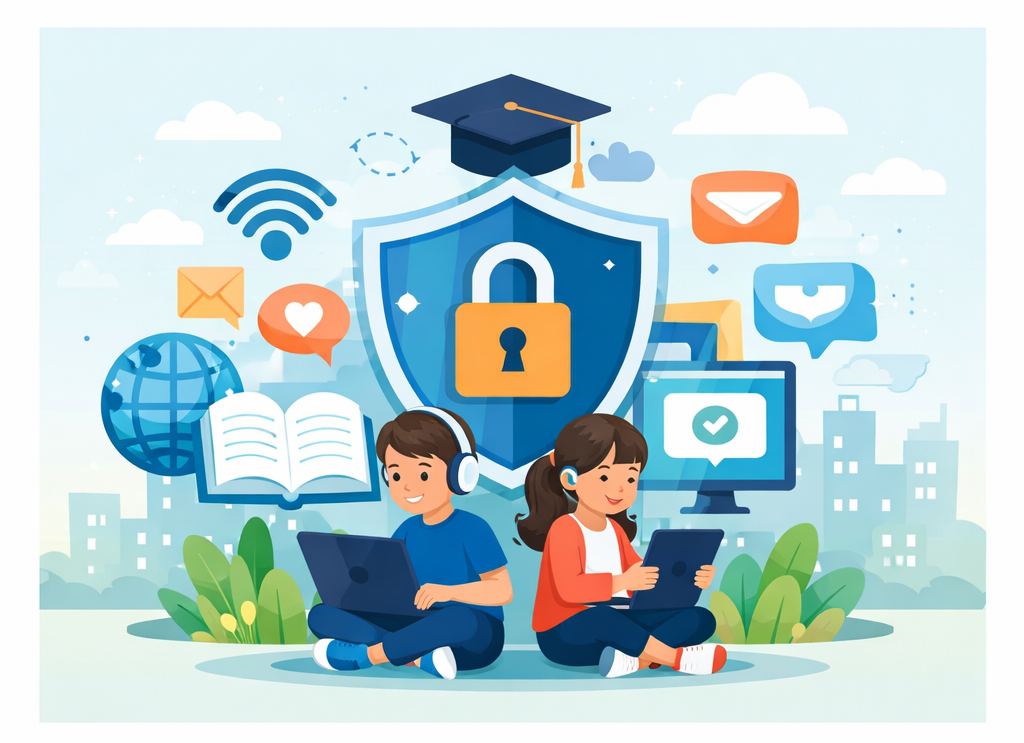
In this context, digital safety must be understood as a holistic concept, encompassing not only technical protections but also education, awareness, and responsible digital citizenship [4].
Lessons from the post-COVID-19 landscape
The pandemic highlighted both the potential and the fragility of digital education systems. It exposed inequalities in access to technology, gaps in digital skills, and the urgent need for adaptable safety strategies [3].
Moving forward, a resilient digital education framework should include:
- Enhanced digital literacy and health literacy
- Inclusive access to digital tools and resources
- Strong collaboration between educators, parents, and policymakers
- Integration of digital citizenship into curricula
These elements are essential for creating equitable and sustainable digital learning environments.
Addressing gaps and looking ahead
Despite growing research in this field, there remains a significant gap in understanding how digital safety, literacy, wellbeing, and habits interact as a unified system. Current studies often examine these elements in isolation, limiting the development of comprehensive strategies [1].
Future efforts should focus on:
- Developing holistic frameworks that integrate all key dimensions
- Conducting longitudinal studies to understand long-term impacts
- Exploring culturally responsive approaches to digital education
Perma-Digital’s contribution
Projects like Perma-Digital are uniquely positioned to address these challenges by promoting inclusive, safe, and empowering digital environments. By fostering collaboration across stakeholders and supporting evidence-based approaches, such initiatives contribute to building a more resilient digital future for education.
Conclusion
As education continues to evolve in the digital age, ensuring the safety and wellbeing of young learners must remain a central priority. By integrating digital literacy, wellbeing, and safety into a cohesive framework, educators and policymakers can better support students in navigating the complexities of the digital world.
The path forward requires collaboration, innovation, and a commitment to creating environments where every learner can thrive—safely, confidently, and inclusively.
References
[1] Cowling, M., Sim, K. N., Orlando, J., & Hamra, J. (2025). Untangling Digital Safety, Literacy, and Wellbeing in School Activities for 10 to 13 Year Old Students. Education and Information Technologies.
[2] Livingstone, S., Mascheroni, G., & Stoilova, M. (2023). The outcomes of gaining digital skills for young people’s lives and wellbeing: A systematic evidence review. New Media & Society.
[3] Panagouli, E., Stavridou, A., Savvidi, C., et al. (2021). School performance among children and adolescents during COVID-19 pandemic: A systematic review. Children.
[4] Jones, L. M., & Mitchell, K. J. (2016). Defining and measuring youth digital citizenship. New Media & Society.